
The future rarely fits into a single point of view, especially when it comes to AI: some look at it through the lens of economic history and technological revolutions, others — through Python libraries, cloud providers, and daily development tasks. All perspectives come together into a picture that is not yet complete, but already substantial and very interesting.
We asked four identical questions to two top managers at Noveo and received two complementary perspectives: one about trends, trust, and how entire industries are changing, the other about languages, infrastructure, and the skills that are coming to the forefront.
|
Ruby Department Manager German |
Chief Production Officer Pavel |
|
Which languages will be needed in the future? |
|
|
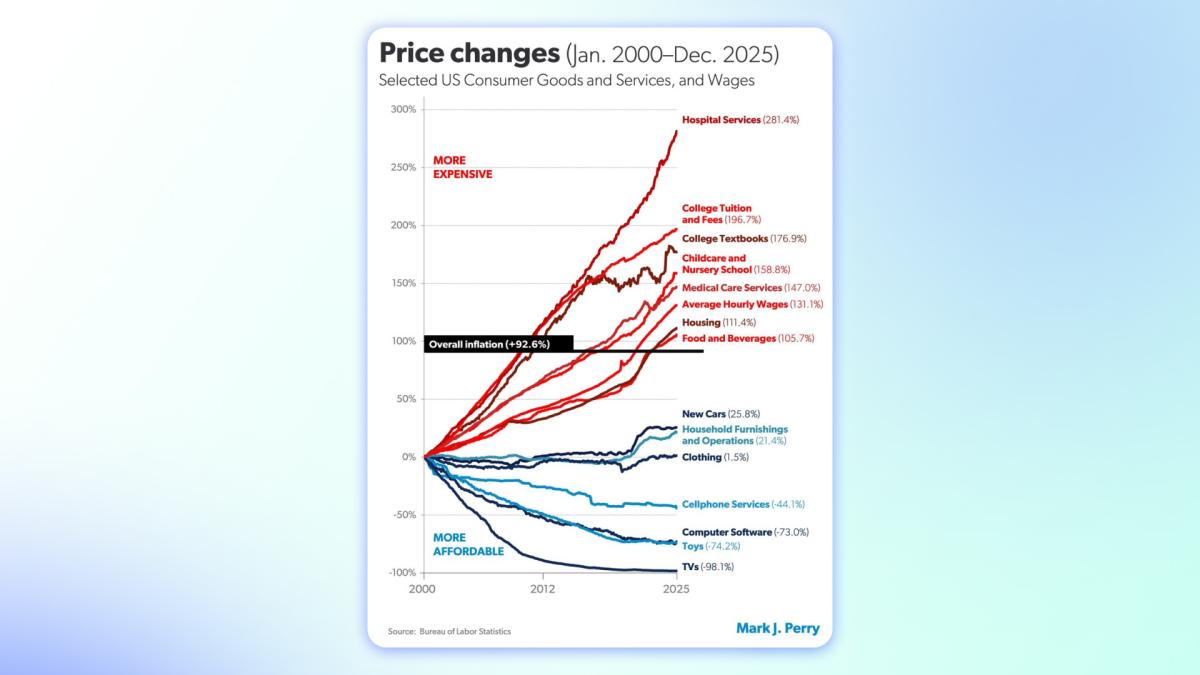
To answer this question, let's first recall the trends of recent years — let's understand what has changed and what has not. From goods to services The economy has gone through several stages: from agricultural to industrial and then to a service economy. Today, services account for the majority of GDP, not manufacturing. Goods that not long ago not everyone could afford are rapidly becoming cheaper. For example, a flat‑screen TV cost $1,825 in 2005; today, a similar one costs about $520, and that's without adjusting for inflation. Services, on the other hand, have only become more expensive — medicine, education, and legal services have risen in price year after year because they could not be automated. |
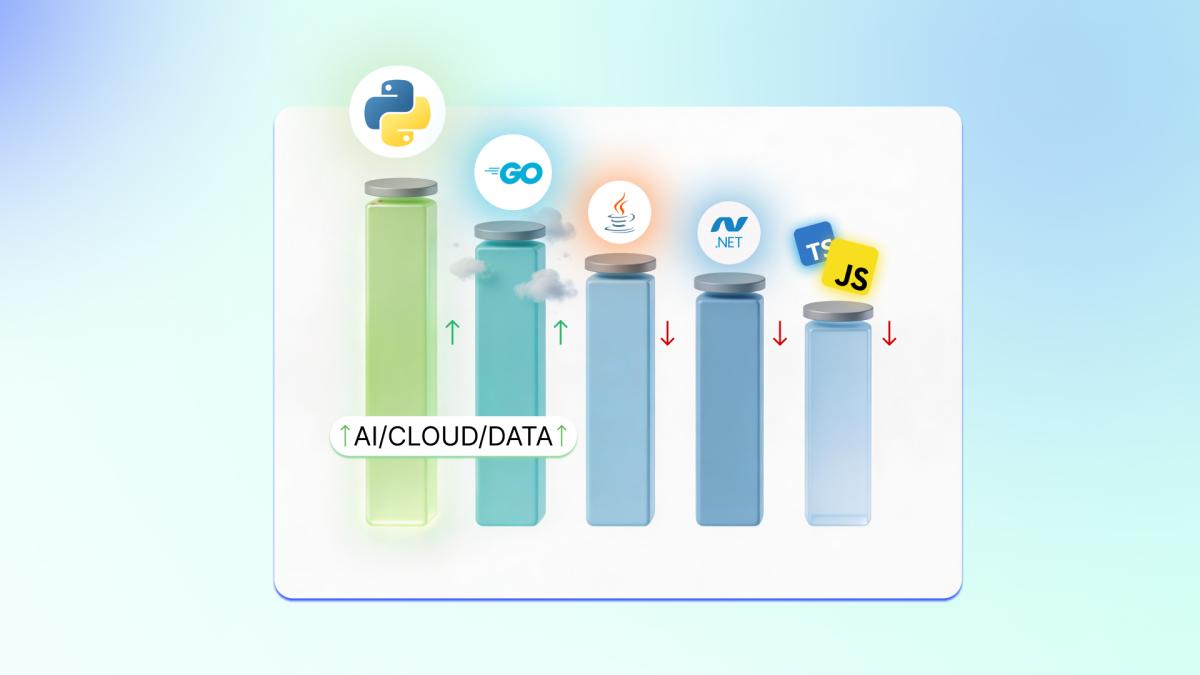
I would particularly highlight the group of languages associated with AI, cloud computing, and data analysis: primarily Python (it has an entire ecosystem of libraries for AI and data analysis), Golang (used to build cloud systems). Classic Java, .NET, Typescript/Javascript will also remain in demand, but their share is gradually declining against the backdrop of a sharp surge in AI/cloud/data. |
 |
 |
|
How has this affected programming? |
|
|
The software market has also changed dramatically: a website cost much more in 2005 than it does now. But even so, there has always been a shortage of programmers. For many years in a row, their numbers grew, but demand grew even faster — along with the global economy and the service economy. Looking at the statistics, the number of developers has doubled over the past four years. There have never been as many programmers as there are today — the industry has gone from university enthusiasts to a significant sector of the global economy. What made it possible to sustain so many people? Economies of scale: one developer creates a product, and thousands or millions of people use it. This is what made it possible to create new services and occupy niches that simply did not exist before. |
I would emphasize a major shift toward infrastructure (for the reasons already mentioned): development is no longer just about writing functional code, but also about scaling, using cloud platforms (AWS, Azure), and data analytics tools. And more and more jobs are opening up in these areas. |
|
How is AI changing these trends? |
|
|
Now let's return to those sectors where automation seemed impossible and costs only increased: medicine, education, and other services. This is where we will see new products — following the same logic as with the TV. AI will monitor our health every day, recommend tests when necessary, and personalize learning. Almost every sector of the economy will need to adopt new technologies. Just as in the 2000s everyone said that every company needed a website, and just about everyone was building those websites, the same will happen with AI: it will have to be integrated into all existing businesses. |
It's important to understand that in development, "polyglots" — those who can use AI effectively to write code in different languages, not just one dedicated one — are becoming more and more valued. This is a direct consequence of AI's impact on our industry. Another important point is that development is accelerating, the path from idea to working prototype is shortening, so the effective (and appropriate — not for everything at once, but targeted) use of AI is becoming a key success factor. |
|
What does this mean for programmers? |
|
|
AI can already take over most of a programmer's routine work. This will allow more services to be created with fewer people. The number of services will grow, their quality will increase, and their price will fall. But it's important to remember a lesson from the last revolution. Even when the internet already existed and everything was technically ready, it took more than ten years for society to learn to trust it and integrate it into its work. AI will go through the same path: even if it can 100% replace humans in some tasks, it will be a long time before that happens everywhere. Therefore, technical skills will remain in demand — understanding how the internet, databases, and computers work; the ability to troubleshoot and solve real problems. Which specific language you write in is no longer that important. |
What is increasingly valued is not the ability to "code," but an engineering approach — analyzing a problem, breaking it down into isolated pieces, describing it concisely (without overloading the context), but at the same time concretely and with all important details taken into account. The skill of successful communication plays a key role in how an engineer writes prompts. Therefore, developing "soft skills" is also becoming an important growth area. Programming languages themselves are moving to the background — rising to the top is the ability to formulate, delegate, and control. |
Two answers. Two angles. And both agree on one thing: language is no longer what matters most. And the future will most likely happen where both views intersect — where code philosophy meets prompt practice.
AI accelerates and automates; the programming language becomes secondary — but to use AI effectively, you need to understand how databases, the internet, and infrastructure work; and to make decisions, you need to be able to break down problems, communicate, and trust.
AI doesn't ask what language you write in. It asks how you think.
And from which side do you see the future?
